
With states already beginning to mail ballots ahead of the midterms, the administration urges the high court to lift a federal injunction blocking new Postal Service requirements and warns that delays could create confusion as election preparations accelerate.
WASHINGTON — The Trump administration on Sunday renewed its appeal to the U.S. Supreme Court after a federal judge blocked new restrictions on mail-in ballots ahead of the midterm elections.
The filing came after U.S. District Court Judge Indira Talwani extended an order preventing the Postal Service from enforcing President Donald Trump’s executive order for the November elections.
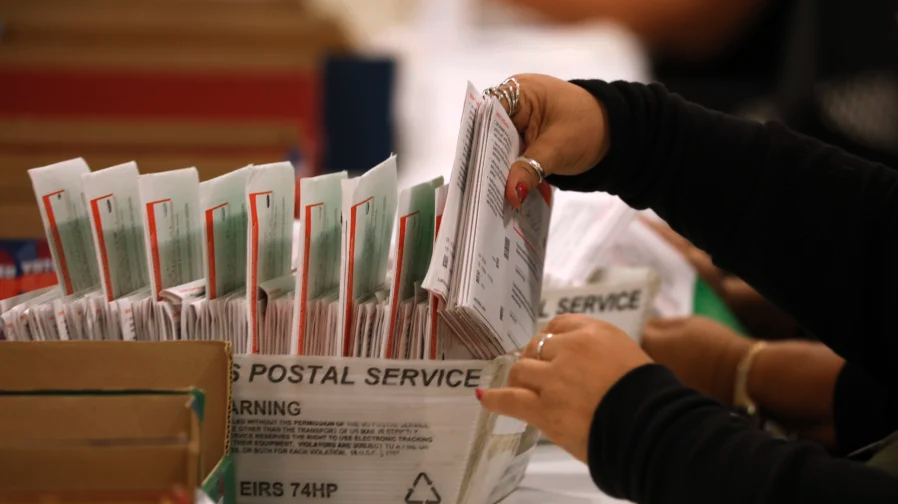
The legal battle is unfolding as states begin sending out mail-in ballots, leaving the administration with little time to make significant changes to mail-in voting rules.
“Ballots have already begun to be mailed in North Carolina, and more States will begin the mailing process as the injunction remains in place—including Alabama on September 9 and at least five States the week of September 13,” Solicitor General John Sauer said in the filing.
“Once those ballot envelopes enter the mailstream, there is no retrieving them. And while the injunction allows the Postal Service and the States to continue taking steps to ensure that their envelopes satisfy the Rule’s requirements ... each day the injunction is in place risks sowing confusion and chaos because the injunction makes those preparatory steps voluntary, rather than mandatory.”
The appeal marks the third time the administration has asked the high court to intervene. The Supreme Court has allowed the plan to move forward but has not ruled on whether it is legal.
The dispute could have significant ramifications for this year’s elections, in which control of Congress is at stake. Nearly one-third of U.S. voters cast ballots by mail.
Democratic states and voting rights groups argue that the changes are unconstitutional. Election officials, meanwhile, contend that there is not enough time to revise their systems to comply with the new Postal Service directives.
The Trump administration has described the restrictions as commonsense changes that fall within its authority to regulate the mail.
“Simply put, the best way to address respondents’ fears about inability to comply with the Rule is to grant an immediate administrative stay of the order, followed by a full stay pending further review,” Sauer said. “That will remove the improper cloud of uncertainty that the district court has cast over the Rule, making clear to all involved that compliance with the Rule is not optional and must start without further delay.”
The filing also emphasized that eligibility for mail-in and absentee voting will continue to be governed by state law. State and local election officials will determine who is eligible to use the method and which ballots are eligible to be counted.
“The Postal Service will not play any role in determining voter eligibility, maintaining voter rolls, or counting ballots.”