
Court Rules President Exceeded Constitutional Authority as Legal Battle Over Mail-In Voting Restrictions Intensifies
A federal judge has blocked President Donald Trump’s executive order aimed at tightening regulations on mail-in voting, ruling that the measure unlawfully infringes upon state authority over federal elections.
On June 25, U.S. District Judge Indira Talwani ruled in favor of a coalition of Democrat-led states, concluding that the executive order exceeded the president’s constitutional powers.
In her decision, Talwani wrote that “the Constitution does not grant the president any specific powers over elections.”
The ruling found that the executive order violated constitutional principles by attempting to exercise authority traditionally reserved for state and local governments, which have overseen election procedures since the nation’s founding.
Talwani also determined that the president lacked the authority to establish state-by-state voter rolls. Additionally, she ruled that the U.S. Postal Service (USPS) does not have the legal authority to create binding regulations governing mail-in voting.
Following the decision, the White House expressed confidence that the administration would ultimately prevail in court.
“President Trump is committed to ensuring that Americans have full confidence in the administration of our elections,” White House spokesperson Abigail Jackson told The Epoch Times. “The president’s executive order lawfully protects our elections, and we are confident that we will ultimately prevail in its implementation.”
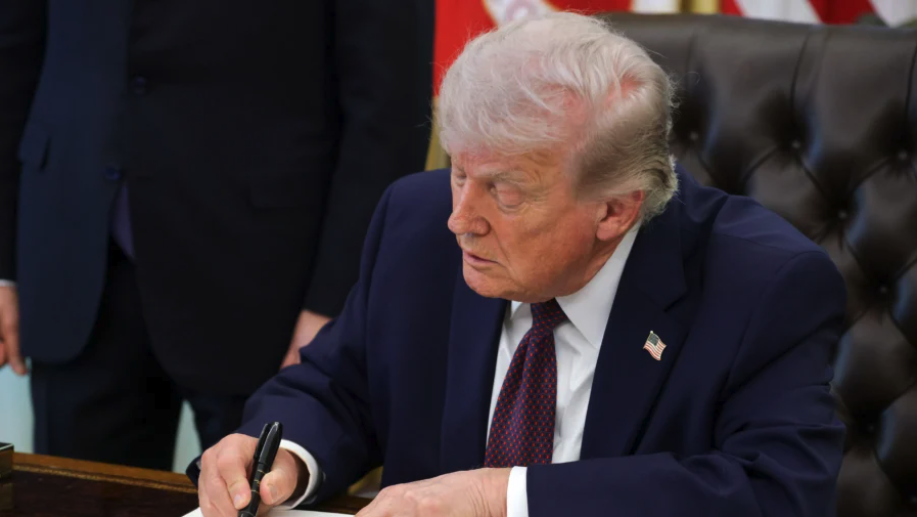
Signed on March 31, Trump’s executive order directed the U.S. Department of Homeland Security to compile lists of verified U.S. citizens eligible to vote in each state by using citizenship, naturalization, and other federal records.
However, Talwani noted that any such database would likely be incomplete because federal privacy laws restrict the sharing of sensitive personal information collected by government agencies.
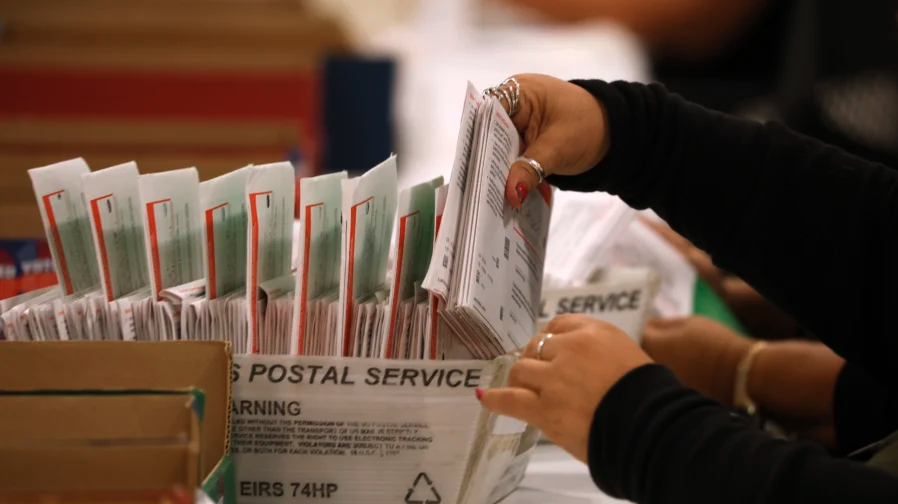
The order also instructed the USPS to deliver ballots only to individuals listed on state-approved mail-in voting registries. In response, the USPS proposed regulations requiring states to provide voter names and ballot-related barcodes in accordance with the directive.
In addition, the executive order instructed the Department of Justice to prioritize investigations and prosecutions of state and local election officials who distribute federal ballots to individuals considered ineligible to vote.
Talwani’s decision came after another federal judge, U.S. District Judge Carl Nichols, declined to block the executive order in a separate lawsuit filed by Democratic groups. Nichols ruled that the legal challenge was premature because the order had not yet been fully implemented. That decision is currently under appeal.
Trump has made the passage of a broad package of nationwide voting restrictions a key policy objective. On June 24, he canceled a planned bill-signing ceremony that lawmakers had intended to use to highlight bipartisan legislation addressing housing affordability.
Trump said he would not sign the housing bill until Congress passes the SAVE America Act, which would require proof of U.S. citizenship to vote in federal elections and impose additional restrictions on mail-in voting. Democrats have opposed the legislation, arguing that it amounts to voter suppression. Senate Majority Leader John Thune (R-S.D.) has stated that there are not enough votes to pass the bill or eliminate the filibuster, a step Trump has advocated in order to secure the legislation’s passage.
Also on Wednesday, U.S. Postmaster General David Steiner told Congress that the USPS would stop delivering ballots in states that refuse to provide lists of voters receiving mail ballots under the proposed rules. However, he added that the agency would comply with any court order preventing those restrictions from taking effect.