President Says Tehran Has Denied Reports of Maritime Charges, While Nuclear Talks and Congressional Debate Over Iran Policy Continue
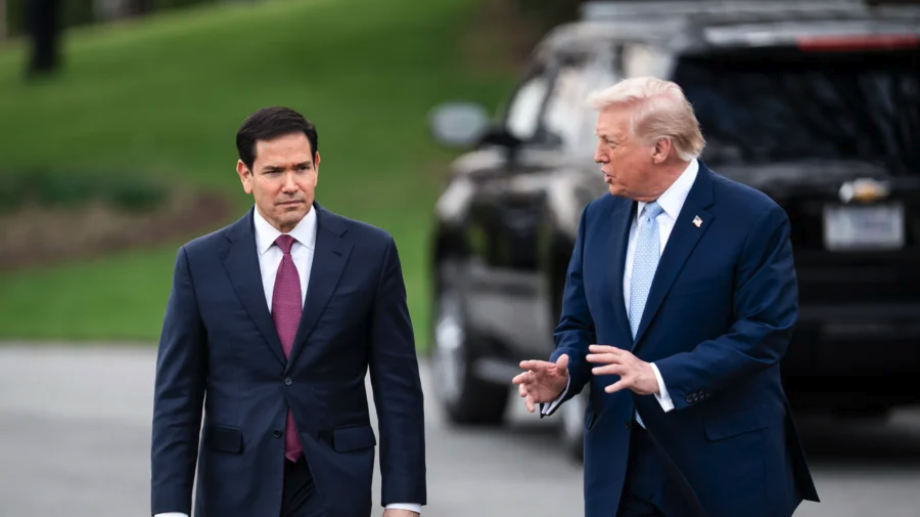
President Donald Trump said on Wednesday that the Iranian regime has informed the United States that it is not imposing tolls, insurance fees, or any other charges on vessels transiting the Strait of Hormuz, pushing back against recent reports that suggested otherwise.
“Iran has informed the U.S. that, despite troublemaking Fake News reporting to the contrary, there are ‘no tolls, no insurance costs, & no other charges of any kind being sought or received by Iran on ships traveling the Strait of Horm,’” Trump wrote in a Truth Social post, largely in capital letters.
When the strategic waterway was previously shut down, gasoline and oil prices surged sharply, with Brent crude frequently rising above $100 per barrel. Since the memorandum was signed, however, both oil prices and gasoline prices in the United States have declined, with the national average for gasoline falling to approximately $3.90 per gallon.
Trump also stated that “no money has been given to Iran” following the memorandum of understanding signed by the two countries last week to bring an end to the conflict.
The agreement initiated a 60-day period for both sides to negotiate a broader deal aimed at ending Iran’s nuclear program. Some Republicans in Congress have voiced concerns over a proposed $300 billion fund intended to assist Iran’s reconstruction efforts.
“We will be releasing some of their money, that is totally controlled by us, to our Farmers and Ranchers, for the purchase of Corn, Wheat, Soybeans, and more,” Trump wrote. “Food is desperately needed in Iran, and we will be purchasing it for them exclusively from the United States.”
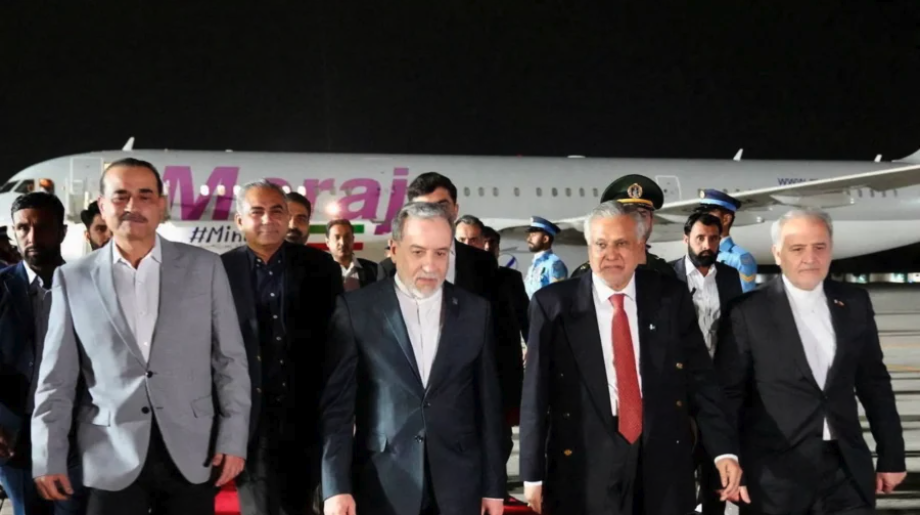
Tehran and Washington, which concluded a first round of negotiations in Switzerland on Monday, have presented differing accounts regarding financial incentives for Iran, control of the Strait of Hormuz, Israel’s parallel conflict in Lebanon, and the role of United Nations inspectors in monitoring Iran’s nuclear activities.
The Trump administration has maintained that Iran must not obtain a nuclear weapon and must either surrender hundreds of pounds of highly enriched uranium or dilute the material.
A photograph released by Iran’s ISNA news agency on June 18, 2026, showed vessels anchored in Bandar Abbas along the Strait of Hormuz. (Amirhossein Khorgooei/ISNA/AFP)
Iranian Deputy Foreign Minister Kazem Gharibabadi said in a post on X that no meeting took place in Switzerland with International Atomic Energy Agency Director General Rafael Grossi, despite Grossi’s request. Gharibabadi added that there are currently no plans to grant access to nuclear facilities that were attacked or to nuclear materials.
“These issues will solely be examined and resolved within the framework of the final agreement and as a result of the other party’s practical action in terminating all sanctions,” he wrote on Wednesday.
On June 23, the Senate approved a war powers resolution by a vote of 50–48 after it had passed the House of Representatives earlier this month, reflecting growing concern over the conflict that has continued since Feb. 28, when the United States and Israel launched an attack on the Iranian regime.
In a Truth Social post on Tuesday evening, Trump criticized the measure, describing it as a “poorly timed and meaningless” vote that would “provide aid and comfort to the enemy.”
“These Senators have just made my job more difficult, but I will get it done, one way or the other, because I always get it done!” Trump wrote.