




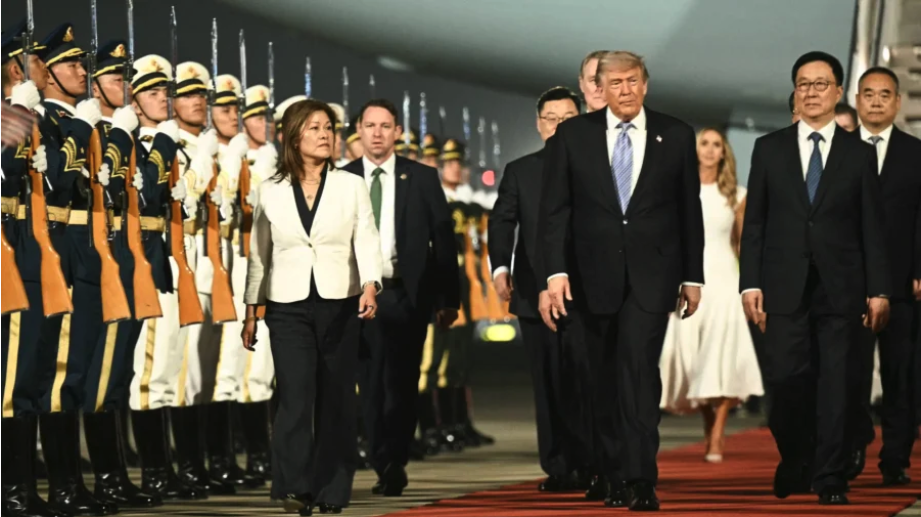
Chinese authorities block multiple Epoch Media Group journalists from covering President Donald Trump’s high-stakes summit with Xi Jinping as broader concerns over press freedom and political pressure intensify
WASHINGTON — An employee of The Epoch Times who was scheduled to travel with the White House press corps to cover U.S. President Donald Trump’s visit to China this week was denied a visa to enter the country.
Travis Gillmore, a White House reporter for The Epoch Times, submitted a visa application on April 10, completing an extensive process requiring detailed information about family members and employers. The application status remained listed as “pending review” and was never updated.
Staff members from NTD, the sister media outlet of The Epoch Times, including White House correspondent Mari Otsu and cameraman Lei Chen, were also denied visas. Otsu reportedly received treatment similar to Gillmore’s, while Chinese American Lei Chen was rejected immediately.
It marked the second time staff members from Epoch Media Group were denied visas for Trump’s China trip, which had originally been scheduled for late March. Due to changes in the travel schedule, the journalists were required to submit visa applications twice.
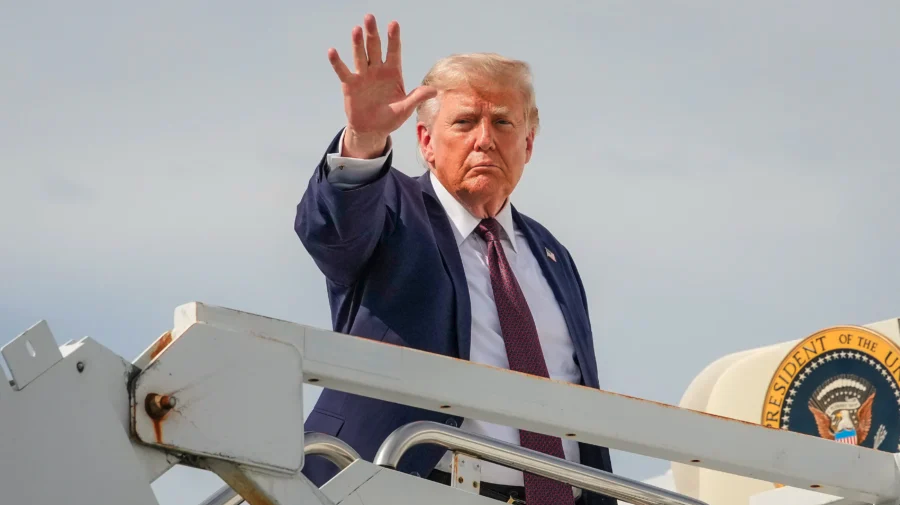
Trump arrived in Beijing on May 13 at 7:50 p.m. local time for meetings with Chinese leader Xi Jinping. The visit marks Trump’s first state trip to China since 2017.
Chinese authorities also denied visa applications for additional members of the White House press corps. According to a source familiar with the travel arrangements, at least 20 individuals planning to cover the trip did not receive visa approval.
A group of journalists, photographers, and videographers accompanied the president for the two-day summit in Beijing on May 14–15.
Talks between Trump and Xi are expected to focus on trade, rare-earth shipments, artificial intelligence, the ongoing war in Iran, and Taiwan.
Questions also remain regarding the Chinese Communist Party’s use of political prisoners and allegations of human rights abuses aimed at maintaining control over the population.
China’s repeated use of visa denials and delays has become a recurring diplomatic tactic employed to restrict critical media coverage.
The Epoch Times was founded in 2000 in the United States by Chinese Americans in response to censorship and human rights abuses in China. The independent news organization now publishes in 22 languages across 33 countries and has nearly one million paid subscribers, making it one of the largest American news publishers by digital subscriptions.
Over the years, the publication has faced sustained pressure from the Chinese regime and affiliated actors seeking to shut down its operations. Incidents have included attacks targeting reporters and printing facilities in Hong Kong.
The first group of Epoch Times staff members operating in China was reportedly arrested and tortured, with several individuals receiving 10-year prison sentences.
In 2006, The Epoch Times became the first publication to report allegations of state-sponsored forced organ harvesting after whistleblowers from China described the systematic killing of prisoners of conscience, particularly Falun Gong practitioners, for their organs.
The publication has also received multiple journalism honors for investigative reporting, including the Sigma Delta Chi Award from the Society of Professional Journalists.
Despite its international reach, The Epoch Times was barred from attending major press events during the Association of Southeast Asian Nations (ASEAN) Summit in Malaysia last year. The restrictions included coverage of Secretary of State Marco Rubio’s July visit for the Foreign Ministers’ Meeting and Trump’s October meeting with ASEAN leaders.
The NTD team encountered similar obstacles in Gyeongju, South Korea, while covering the meeting between Trump and Xi during the Asia-Pacific Economic Cooperation (APEC) conference last October.
At both ASEAN and APEC events, Beijing demonstrated significant regional influence, partly due to the strong economic ties many member nations maintain with China.
A similar pattern emerged last September when United Nations officials denied The Epoch Times press credentials for Trump’s speech at the General Assembly in New York. Although the outlet had been included in the U.S. State Department’s media pool, the U.N. rejected access after classifying the publication as a nongovernmental organization rather than a media outlet.
For years, Chinese authorities have reportedly pressured the United Nations to interfere with The Epoch Times’ reporting activities.
In 2003, after several days of unanswered follow-ups, a U.N. press official in New York reportedly told NTD that “pressure from the Chinese” had complicated the broadcaster’s application to cover Human Rights Commission events in Geneva. A similar incident occurred in June 2004, when a U.N. official acknowledged receiving calls from Chinese officials regarding the broadcaster’s press access. After an initial rejection, credentials were eventually granted.
Hackers have also routinely launched cyberattacks targeting The Epoch Times’ operations. Some malicious actors allegedly sent messages impersonating staff members of the news organizations while threatening terrorist attacks against federal officials and institutions.