


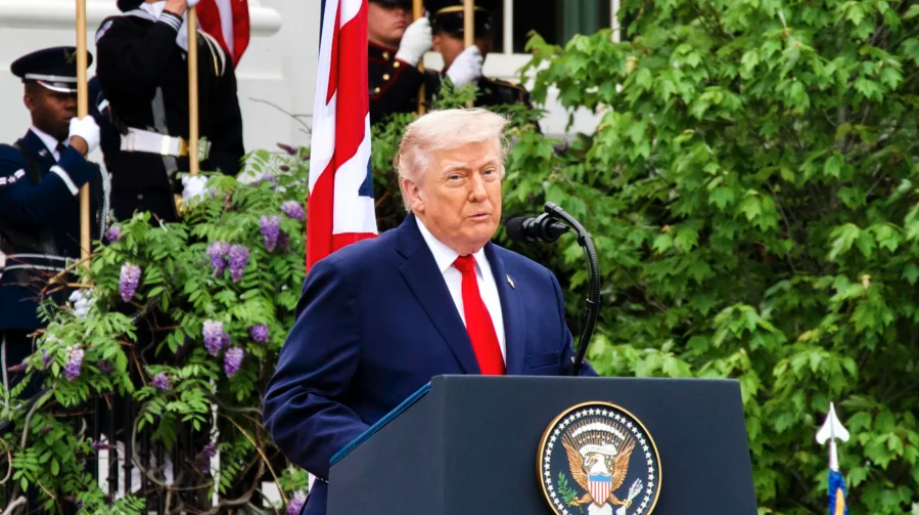
White House says U.S. president will pursue new trade agreements, confront China on Taiwan, Iran, Russia, and rare-earth exports during closely watched summit in Beijing
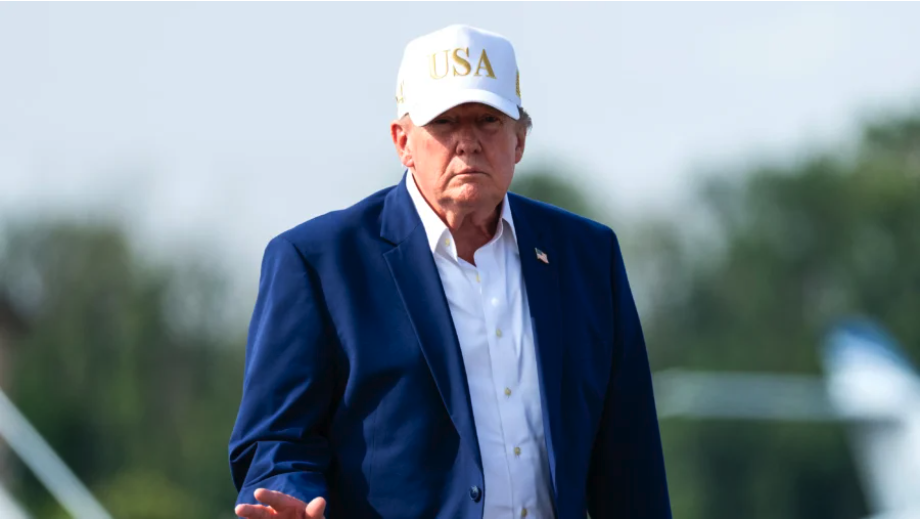
WASHINGTON — President Donald Trump is expected to return from his upcoming trip to Beijing with new agreements that benefit the United States, White House officials said on May 10.
The May 14–15 summit in Beijing between Trump and Chinese leader Xi Jinping is being viewed as a major test of relations between the two countries. During the talks, Trump is expected to address several sensitive issues, including rare-earth exports, trade and purchasing commitments, Taiwan, Iran, Russia, artificial intelligence, and cyber threats.
“This will be a visit of tremendous symbolic significance,” White House spokesperson Anna Kelly told reporters during a May 10 call. “But of course, President Trump never travels for symbolism alone.
“The American people can expect the president to deliver more good deals on behalf of our country.”
Trump is expected to sign new agreements with China across several sectors, including aerospace, agriculture, and energy. According to a senior administration official, the United States is pursuing purchase commitments worth tens of billions of dollars.
Boeing will be part of the business delegation accompanying Trump, the official said. The company has reportedly been in discussions with Beijing regarding the sale of up to 500 aircraft.
Kelly also said both countries are expected to discuss the creation of a board of trade and a board of investment aimed at managing bilateral trade and investment flows.
Beijing Itinerary
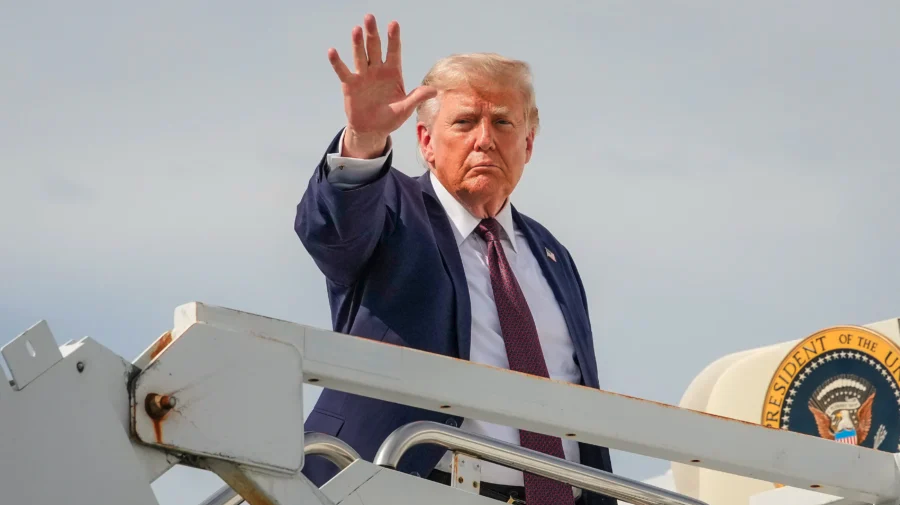
The White House released Trump’s itinerary for the two-day visit. The president is scheduled to arrive in Beijing on the evening of May 13.
On May 14, Trump will attend a welcome ceremony and hold a bilateral meeting with Xi in the morning. In the afternoon, the two leaders will tour the Temple of Heaven before attending a state banquet later that evening.
On May 15, Trump will meet Xi again for a bilateral tea session and working lunch before departing China.
“During this visit, President Trump will continue doing what he has done over the past year, rebalancing the relationship with China and prioritizing reciprocity and fairness to restore American economic independence,” Kelly said.
She added that Trump plans to host Xi and his wife in Washington later this year for a reciprocal visit.
Rare-Earth Exports
Rare-earth exports remain one of the more contentious issues between Washington and Beijing.
In 2025, China imposed strict export controls on rare earths and magnets, disrupting supply chains tied to the U.S. automotive, electric vehicle, and defense sectors.
In late October 2025, Trump and Xi met in Busan, South Korea, on the sidelines of the Asia-Pacific Economic Cooperation summit. During that meeting, Xi agreed to suspend export controls and licensing restrictions on rare-earth elements and critical minerals for one year, ensuring continued supply to U.S. and global markets.
A Trump administration official said the agreement remains active.
“It’s still in effect,” the official said, adding that discussions with China are ongoing although it remains uncertain whether the arrangement will be extended. “It doesn’t expire yet.
“I’m confident that we’ll announce any potential extension at the appropriate time.”
Taiwan
Taiwan remains another key point of tension in U.S.–China relations.
“There is an ongoing conversation between President Trump and General Secretary Xi Jinping about Taiwan,” a senior administration official said during the call. “We don’t expect to see any changes in U.S. policy going forward.”
Xi has previously opposed U.S. arms sales to Taiwan.
The official said Washington’s stance on Taiwan’s defense budget remains unchanged, noting that the Trump administration approved significantly more arms sales to Taiwan in its first year than the previous administration approved over four years.
However, the official also expressed disappointment over recent defense spending cuts approved by Taiwan’s opposition-controlled parliament.
“Our position on Taiwan’s defense budget, which they passed the supplemental last week, is that it was disappointing in that there was some stuff left on the cutting room floor that we believe still needs to be funded,” the official said.
Iran and Russia
Washington has accused China of supporting both Russia and Iran, including assisting Tehran in carrying out military operations in the Middle East and aiding Moscow in the war in Ukraine.
“The president has spoken multiple times with General Secretary Xi Jinping about the topic of Iran and about the topic of Russia, to include the revenue that China provides to both those regimes,” the senior administration official said.
The Trump administration has urged Beijing to support U.S. efforts to reopen the Strait of Hormuz, a critical oil transit route that Iran previously closed. However, China has not publicly responded to the request.
Iranian Foreign Minister Seyed Abbas Araghchi met with Chinese Foreign Minister Wang Yi last week.
“I expect that conversation to continue,” the official said. “I think you’ve seen some actions, meaning sanctions, coming out from the U.S. side, just in the last few days, that I’m sure will be part of that conversation.”
Concerns Raised Over the Visit
As Trump prepares for the Beijing trip, some China hawks in Washington have raised concerns about the visit.
“Nothing good is going to happen,” Senator Rick Scott said during an appearance on The Glenn Beck Program on May 8.
“[China] has elected to be our enemy. … Think of how many Americans they’ve killed with fentanyl. They’ve tried to destroy all of our companies, right? They’re threatening our allies.”
“They steal organs from their own citizens,” he added, describing China’s communist leadership as “despicable.”
Trump had previously postponed the Beijing trip, originally scheduled for March 31 to April 2, because of the conflict involving Iran.
An administration official said there are currently no plans to delay the visit again.
“Clearly six weeks ago, we were in a bit more of an active situation in Iran, and the president made the decision to push it back,” the official said.