

Massachusetts court temporarily halts enforcement of federal grant requirements tied to gender identity, DEI policies, transgender athletics, and illegal immigration while lawsuit moves forward
A federal judge on June 5 temporarily blocked the Trump administration from conditioning billions of dollars in federal funding on compliance with antidiscrimination policies related to gender identity, transgender athletes, illegal immigration, and diversity, equity, and inclusion (DEI) initiatives.
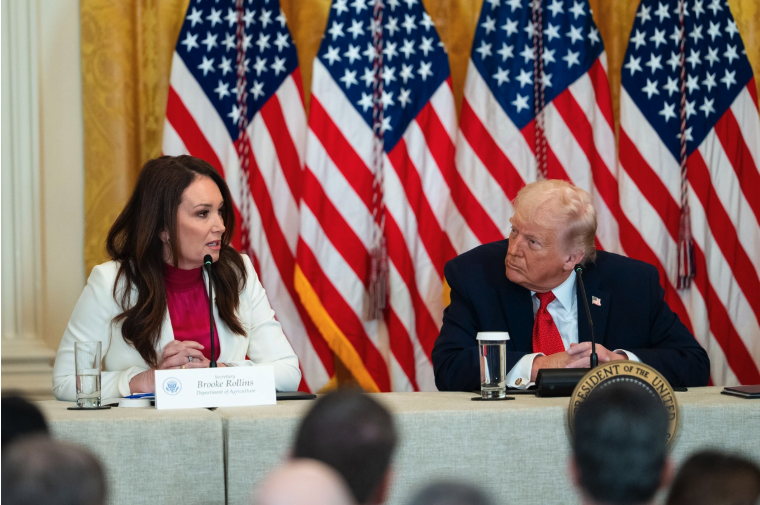
Judge Myong Joun of the U.S. District Court for the District of Massachusetts granted the preliminary injunction requested by more than a dozen attorneys general from Democrat-led states and the District of Columbia. The plaintiffs sued the United States Department of Agriculture (USDA), arguing that the agency lacked authority to impose the requirements and that the conditions threatened critical nutritional and agricultural programs.
Joun said he would issue a memorandum explaining his decision at a later date. By granting the preliminary injunction, the judge temporarily barred the USDA from enforcing the disputed provisions while the case proceeds through the courts.
The challenged conditions included prohibiting federal grant recipients from using funds to “promote gender ideology” and from directing funding toward programs that “deprive women and girls of fair athletic opportunities.”
The disputed provisions also barred the use of federal funds for programs that “allow illegal aliens to obtain taxpayer-funded benefits ... or provide incentives for illegal immigration.”
In their March 23 complaint, the Democrat-led states argued that the USDA had “thrown unconstitutional and unlawful roadblocks” between congressionally approved programs and the states that rely on them for “critical nutrition support, vital agricultural research, and the safety of [the] national food chain and communities.”
The states said the conditions could place funding at risk for programs including the Supplemental Nutrition Assistance Program, school meal programs, the Special Supplemental Nutrition Program for Women, Infants, and Children, agricultural research efforts, and wildfire prevention initiatives.
The USDA is responsible for administering a broad range of federal nutrition and agricultural programs, with the plaintiff states collectively receiving tens of billions of dollars annually through those initiatives.
USDA Defends Funding Conditions
In court filings, attorneys representing the federal government argued that the grant conditions were a lawful exercise of USDA authority and were intended to promote the “sound stewardship of taxpayer dollars,” improve oversight of federal funds, and ensure compliance with federal laws and administration policies.
The Trump administration also argued that the lawsuit relied largely on speculative harm because the USDA had not yet applied the challenged conditions to major nutrition assistance programs, including the Supplemental Nutrition Assistance Program, the Special Supplemental Nutrition Program for Women, Infants, and Children, school lunch programs, and school breakfast programs.
“Plaintiffs do not claim that they have had to refuse—or will imminently have to refuse—any federal funding for these programs” because of the challenged conditions, government attorneys wrote in their opposition filing.
Federal lawyers further argued that the states had failed to demonstrate irreparable harm because no funding had actually been terminated and because any financial losses could potentially be remedied later if the court ultimately found that the administration had improperly withheld funds.
Massachusetts Attorney General Andrea Joy Campbell praised the ruling in a social media post, describing the grants targeted by the administration’s conditions as “a lifeline” and stating that she would “always fight to protect food assistance for families.”
The USDA did not respond to requests for comment regarding the ruling.
The June 5 decision is one of several court rulings addressing the Trump administration’s broader effort to align federal funding with policy priorities established through executive orders issued after Trump returned to office.
Additional Legal Battles Over Federal Funding
The administration has faced multiple legal challenges over attempts to restrict federal funding connected to DEI initiatives and other programs it says conflict with federal policy.
Earlier this year, the same judge blocked the United States Department of Education from terminating several education grants that the administration said promoted DEI-related initiatives. In that case, Joun found that the states challenging the cancellations were likely to succeed in arguing that the administration violated the Administrative Procedure Act by failing to provide an adequate explanation for ending the grants.
The Trump administration appealed the ruling, arguing that federal courts were improperly interfering with executive branch authority over federal grants and contracts.
The Supreme Court of the United States later sided with the administration in the education grants dispute, allowing the federal government to continue withholding the grants while litigation continues. The high court said the government had shown it would likely suffer irreparable harm if forced to distribute funds that might never be recovered.