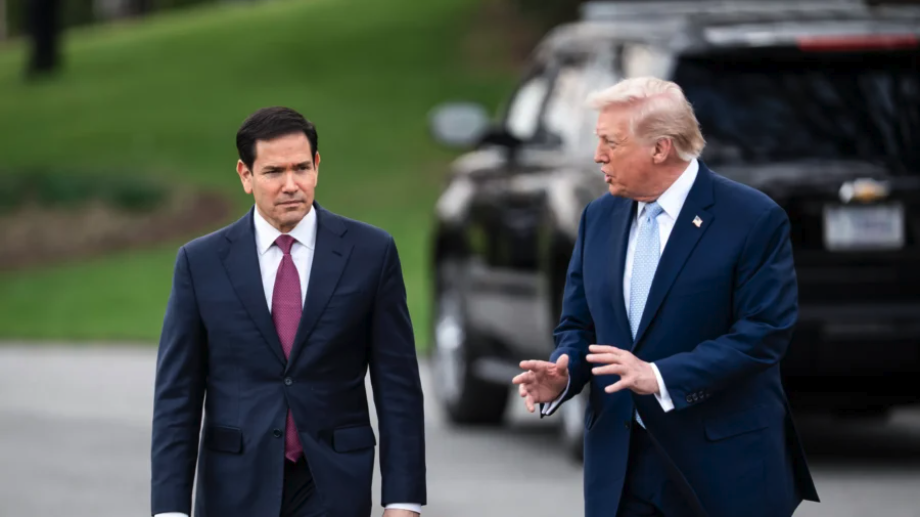

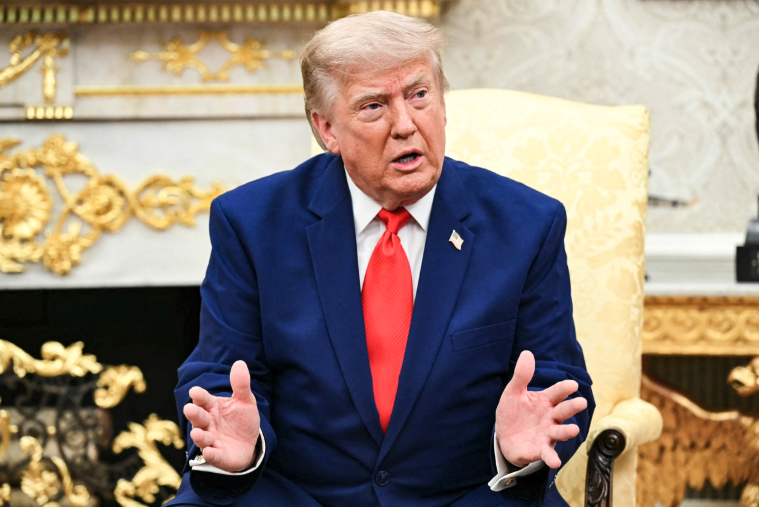




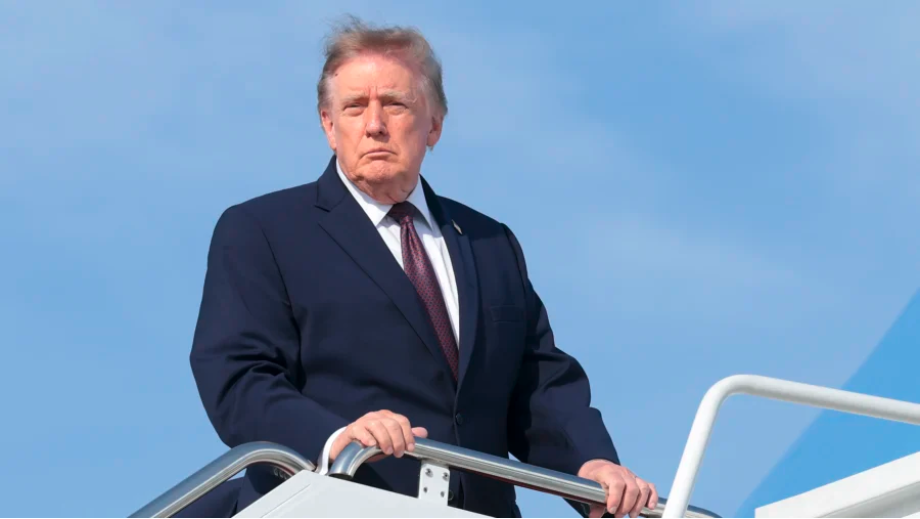
Speaking at a White House Rose Garden luncheon honoring firefighter organizations, President Donald Trump said he had directed the Justice Department to seek capital punishment in cases involving the murder of firefighters responding to emergencies, reinforcing his administration’s broader push to expand the use of the death penalty.
President Donald Trump said Thursday that he wants the death penalty for anyone convicted of killing a firefighter, announcing that he had directed the Justice Department to pursue capital punishment in such cases.
Trump made the remarks during a White House Rose Garden lunch honoring firefighter organizations. He specifically referred to cases in which a firefighter is murdered while responding to an emergency, including while climbing a ladder.
“Anybody that murders a firefighter going up a ladder,” Trump said, describing the circumstances in which he wants prosecutors to seek the death penalty.
The announcement reflects Trump’s broader support for expanding the use of capital punishment for violent crimes. He has previously called for the death penalty for people convicted of killing police officers and has directed his administration to prioritize federal death penalty cases.
However, the Justice Department’s ability to seek capital punishment depends on the circumstances of each case and whether the alleged crime falls under federal jurisdiction. Many homicide cases are prosecuted under state law, meaning the federal government cannot automatically impose its preferred penalty in every case involving the death of a firefighter.
Trump’s remarks did not establish that every person convicted of killing a firefighter would automatically receive a death sentence. Prosecutors must bring charges under applicable law, and capital cases remain subject to legal requirements and court proceedings.
In April, the Justice Department announced steps to restore and expand federal capital punishment procedures, including changes to execution protocols and efforts to streamline internal processes. The department said the measures were intended to carry out lawful death sentences and reinforce public safety. The administration has argued that capital punishment can serve as a deterrent and deliver justice for victims and their families.
“The prior administration failed in its duty to protect the American people by refusing to pursue and carry out the ultimate punishment against the most dangerous criminals, including terrorists, child murderers, and cop killers,” Todd Blanche, then-Acting Attorney General, said at the time.
The death penalty remains a controversial issue in the United States, with ongoing disagreements over its effectiveness, fairness, and application. Supporters argue that it is an appropriate punishment for the most violent and serious crimes, while opponents raise concerns about wrongful convictions, racial disparities, and the lengthy legal process involved in capital cases.
The Justice Department’s decision to pursue the death penalty in a particular case would not itself guarantee a death sentence. Any such case would still have to proceed through the judicial system.