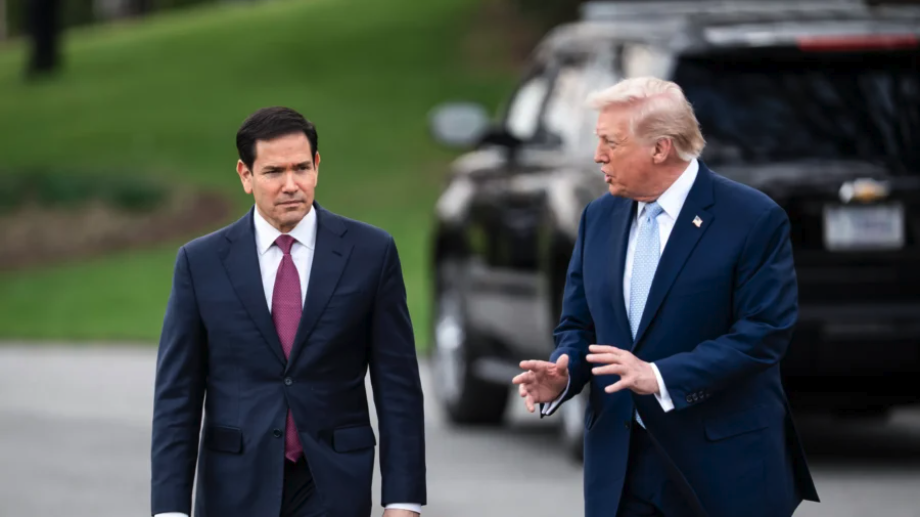



Following major Republican losses in the midterm elections, President Donald Trump has appointed his longtime adviser and immigration policy architect Stephen Miller to lead White House operations, while moving outgoing Chief of Staff Susie Wiles to his political operation.
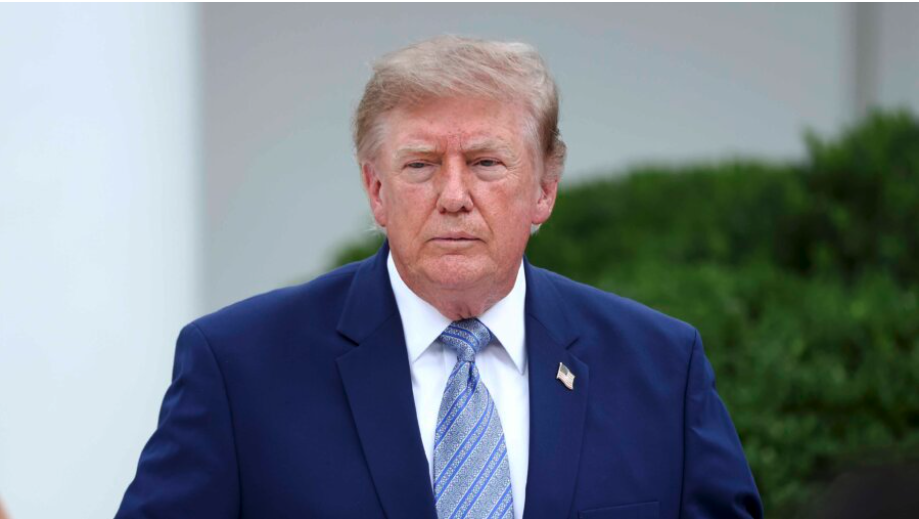
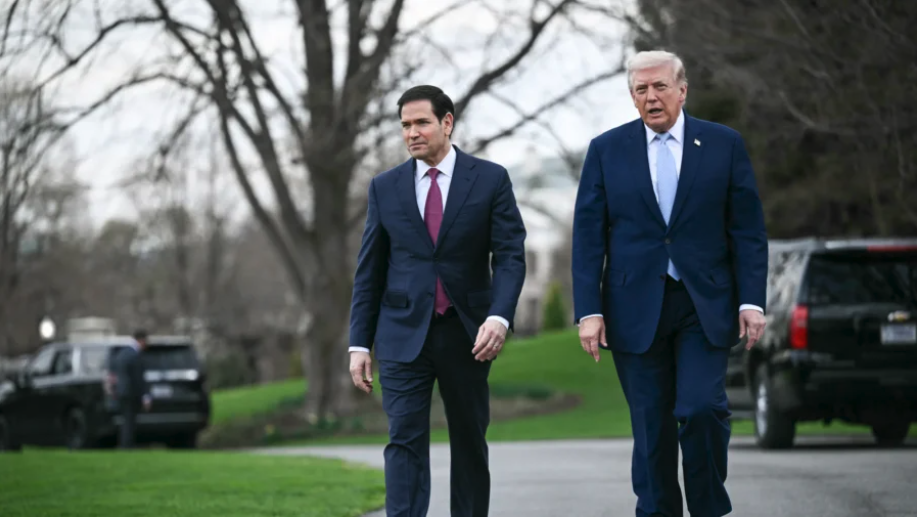
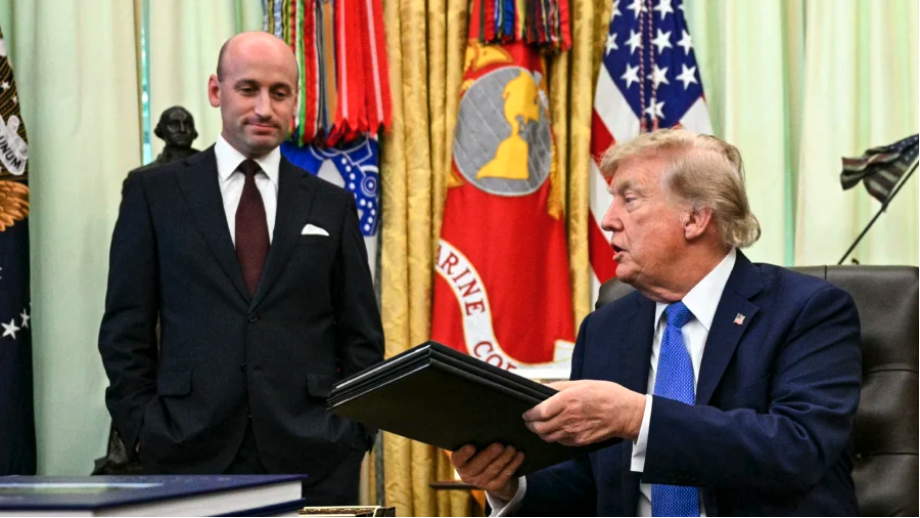
President Donald Trump announced Friday that Stephen Miller will become his new White House chief of staff, replacing Susie Wiles, who will transition to another position within his political operation.
The announcement comes after significant Republican losses in the midterm elections.
Miller, currently the president’s deputy chief of staff and a prominent advocate of the administration’s mass deportation agenda, will assume the role on Nov. 9, Trump said in a post on Truth Social.
Wiles, who previously served as Trump’s campaign manager before joining the White House, will move to what the president described as the “Trump Political operation.”
“I want to thank her for her service as Chief of Staff—She has done a great job,” Trump wrote.
In a post on X, Wiles confirmed that Friday would be her final day as White House chief of staff, describing her service in the administration as “the honor of a lifetime.”
“I’m so proud to have been a part of what we’ve accomplished together from securing our border and cutting taxes to strengthening our economy and putting America First,” she wrote. “More than anything, I’m grateful for the extraordinary people I’ve had the privilege of working alongside.”
“While my role may be changing, my commitment to the President and the mission never will,” she added.
A White House official told The Epoch Times that Wiles submitted her resignation on Thursday evening.
Speaking to reporters Friday afternoon, Trump said he had wanted to make a change with Wiles's departure.
“I think Susie's done a very good job, great job. But I just wanted to make it. Stephen's been great, and ... we gotta make moves. Sometimes in life, you have to make moves,” he said.
Trump added that Miller had “been with [him] from the beginning” and would “do a great job” overseeing White House operations.
The personnel change comes as several figures on the political right have called for Wiles to be removed following Republican midterm losses that handed control of Congress to Democrats.
Former Trump White House aide and campaign manager Steve Bannon called for Wiles's departure during an interview with journalist Steven Edginton released Friday morning.
“I think that you have to look to people like Susie Wiles, the chief of staff, and the political consultants that are there … because of the results, they should be removed and removed immediately,” Bannon said.
Caroline Sunshine, a former Trump staffer, also told Fox News on Wednesday that Wiles “needs to resign,” arguing that “her campaign skills have not translated into governing.”
Meanwhile, some congressional Democrats criticized Trump's decision to promote Miller to chief of staff.
“Stephen Miller is the most dangerous person in Trump’s administration and should be fired instead of promoted,” Sen. Andy Kim (D-N.J.) wrote in a post on X.
“Americans overwhelmingly voted to end the chaos and lower costs. Stephen Miller has done nothing but sow hatred and foster corruption,” Kim added.
Miller's Role in Trump's Immigration Agenda
Miller has been one of the leading advocates of the second Trump administration’s immigration policies, particularly its efforts to carry out mass deportations.
“Americans voting overwhelmingly for mass deportation,” Miller said in an interview with CNN earlier this year. “Congress passed laws requiring it and then passed new legislation to fully fund it. The response of the Democrat Party and its activists has been to support and orchestrate violent resistance against federal law enforcement.”
In the lead-up to the midterm elections, Miller also focused on what he described as Democratic-led states' reluctance to verify the citizenship status of registered voters.
“Not one Democrat state—not one—has either a.) checked the citizenship status of their voter file or b.) shared their voter records with [the Department of Homeland Security] to check citizenship. The total number of illegal and non-citizen voters is astronomical,” he said on Nov. 1.
Earlier this year, Wiles disclosed that she had been diagnosed with breast cancer. In September, she announced that she was free of the disease.
The White House did not immediately respond to a request for comment.
Wiles' Decades-Long Political Career
In December last year, Forbes included Wiles, 69, in its annual ranking of the world's 100 most powerful women.
She ranked 66th, reflecting her role in leading Trump's successful 2024 presidential campaign. Shortly after the election, Trump appointed her White House chief of staff, making her the first woman in U.S. history to hold the position.
Over the past two years, Trump has repeatedly praised Wiles publicly for her work and influence within his political operation.
“Most powerful woman in the world. She can take out a country, destroy, take out a country with one phone call,” Trump joked during a speech last year.
In March 2021, Trump hired Wiles as CEO of his Save America Leadership PAC. She later joined Chris LaCivita as co-chair of Trump's successful 2024 presidential campaign.
Wiles had previously helped orchestrate several successful gubernatorial campaigns in Florida and played a key role in Trump's victories in the state in both 2016 and 2020.
Throughout her career, she has worked with prominent Republican figures, including Ronald Reagan, Mitt Romney, Rick Scott, and Ron DeSantis.
Wiles began her political career as a staff assistant to Rep. Jack Kemp (R-N.Y.) from 1979 to 1980. She subsequently served as deputy director of scheduling for Reagan's 1980 presidential campaign and as a special assistant to the president from 1981 to 1982.
Years later, she moved into campaign management, working for prominent Republican candidates.
In 2010, Wiles managed Rick Scott's gubernatorial campaign in Florida, helping him narrowly defeat Democratic candidate Alex Sink.
When Sen. Mitt Romney (R-Utah) ran for president in 2012, Wiles served as co-chair of his Florida advisory council. She also briefly managed the 2012 presidential campaign of former Utah Gov. Jon Huntsman.
Wiles was later credited with helping revive Ron DeSantis's 2018 Florida gubernatorial campaign when he was still a relatively little-known congressman. She served as his senior adviser from September 2018 through January 2019.
However, following DeSantis's victory in 2018, tensions emerged between Wiles and the governor, eventually leading to their separation.
Past Lobbying Ties
Shortly after Trump appointed Wiles as White House chief of staff, her professional connections to Chinese companies came under scrutiny, largely because of her background as a prominent lobbyist.
News organizations, including RealClearInvestigations, reported that her former firm, Mercury Public Affairs, had represented Chinese companies in lobbying activities.
Wiles served as co-chair of global public strategy at Mercury Public Affairs from February 2022 until she left the firm to manage Trump's 2024 presidential campaign.
Public filings from that period identified two major Chinese corporations, JinkoSolar and Hikvision USA, as clients of Mercury. Both companies faced U.S. tariffs and sanctions over allegations and concerns related to their assistance to the Chinese communist regime.
The U.S. government imposed strict sanctions on Hikvision, citing the use of its surveillance cameras in human rights abuses and military activities.
Meanwhile, JinkoSolar faced scrutiny and investigations, as well as U.S. import bans, over links between its solar panel supply chains and state-sponsored forced labor programs involving Uyghurs.